
On the coldest evenings you can almost feel it happening, the warmth you paid for slipping away through the ceiling, the door frames and the thin places you never think about until your feet find them. Learning how to improve home insulation is how you stop that quiet waste, not with one grand renovation, but with calm, practical jobs that help the house hold its heat longer each night. Some take a free afternoon, others take a weekend in the loft, and together they turn a house that cools in an hour into one that still feels kind in the morning.
Where Your Heat Escapes: The Warmth Map of a House
Every house has a warmth map, and the easiest way to find yours is to walk slowly from room to room on a windy winter night with your bare hand near the places heat loves to leave. Stand by the front door and feel for the thin cold line at its edge, crouch near a window frame, rest a palm on an outside wall, then look up, because warm air rises all evening and gathers at the ceiling, searching for the loft hatch above your head. That walk teaches you more about how to improve home insulation in your own home than any generic checklist, because it shows you your leaks, in the order your house actually loses heat.
Carry one simple rule as you go: heat escapes fastest where air can move and where a warm surface touches a cold one. The loft is usually the biggest cold surface, but doors, windows, floors and weather-facing walls all play their part, and small gaps add up fast, a narrow crack under every door becoming a permanent open window you never chose. When people ask how to improve home insulation without spending on the wrong job first, the honest answer is to map first and mend in order, biggest leaks first. That is how to improve home insulation in a way that feels personal rather than overwhelming, one found leak, one fixed leak, one warmer room at a time.
Loft Insulation: The Biggest Win Above Your Head
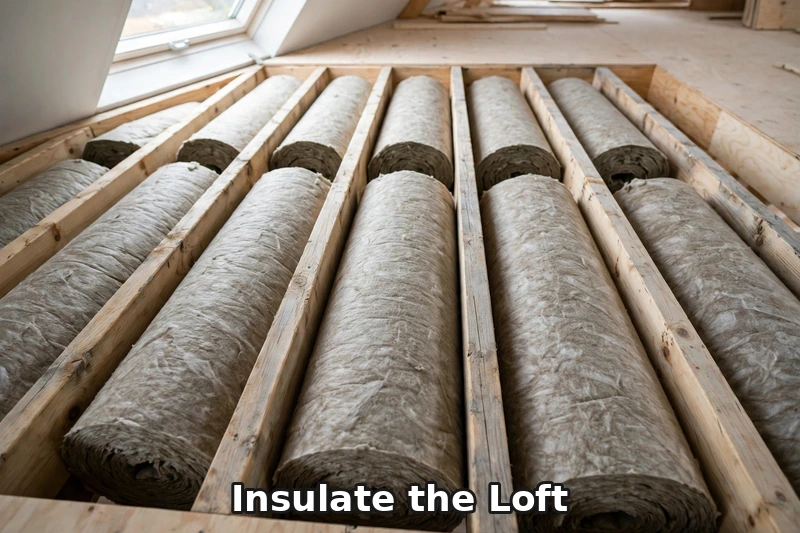
If you only do one big job, make it the loft, because heat rises through the ceiling all day and all night, and a thinly covered loft lets it pour straight out through the roof. Loft insulation works like a thick hat on the house, rolls laid between the joists and then across them, trapping still air and slowing the warmth on its way out. For many homes this is the clearest answer to how to improve home insulation, the job that changes the feel of the whole house rather than just one room, and it is worth checking even if yours was done years ago, because old insulation settles and gets squashed under stored boxes.
Go up on a bright day with a torch and look honestly at what is there. The insulation should sit evenly, with no bald patches around the hatch, pipes and edges, and it should not be crushed flat, because squashed material holds far less still air. Laying new rolls is steady, dusty work: wear a mask, gloves and old clothes, kneel on boards across the joists, unroll gently, and keep the material clear of the eaves so air can still move in the roof space and carry moisture away. Keep it away from recessed lights unless they have proper covers, clear of flues and hot pipes, and do not forget the hatch itself, because an uninsulated hatch is a hole in the hat. Done well, loft work is how to improve home insulation for the long term. It is also how to improve home insulation without touching a single wall, the biggest warmth for the least disruption.
Draught-Proofing Doors, Windows and Letterboxes
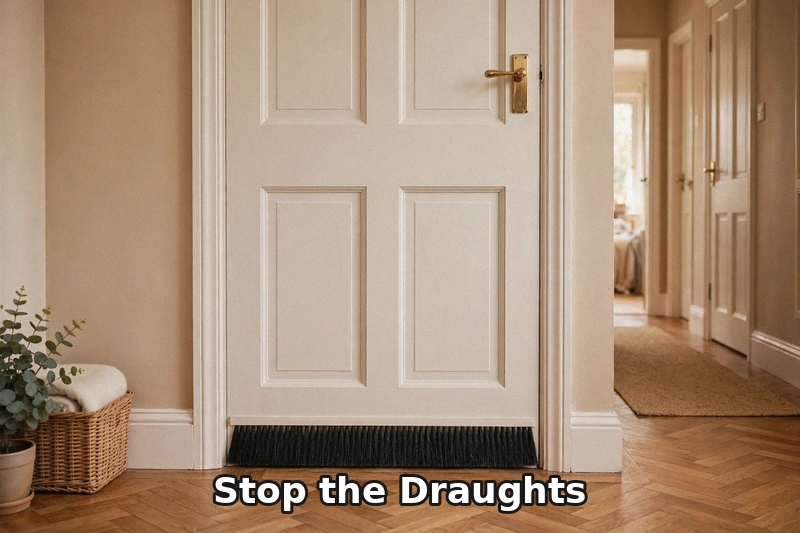
After the loft, chase the moving air, because insulation slows heat loss but draughts carry warmth away on a current, and you can feel the difference the same evening you seal them. Start with the front and back doors: fit a brush or rubber strip along the bottom, add sealing tape around the frame, and do not forget the keyhole and the letterbox, two small holes that pour cold air into hallways all night. A letterbox brush and a simple keyhole cover cost little and close gaps you can test with the back of your hand. For anyone learning how to improve home insulation on a tight budget, this is the kindest place to begin, because the materials are cheap and the reward is instant.
Windows come next, especially older ones that rattle in their frames when the wind gets up. Sealing tape fitted on a dry day closes the thin gaps that whistle, and heavy curtains handle much of the rest. Check where frames meet the wall, too, because cracked sealant there can leak as steadily as the window itself. Hold one balance in mind: a home still needs fresh air, so never block air bricks, wall vents or the air supply a boiler or fire depends on, and keep kitchens and bathrooms breathing after steam. Kept in that balance, draught-proofing is how to improve home insulation safely. It is also how to improve home insulation room by room, because you can seal the coldest room tonight and feel the result before bed.
Walls and Floors: The Quieter, Deeper Wins
Walls are the largest surface of most homes, so once the loft is covered and the draughts are stopped, they become the next place warmth quietly leaves through, especially the solid outside walls of older houses with no cavity to fill. Wall insulation is a bigger decision than loft work, sometimes a job for professionals, and it deserves proper advice for your type of house before you commit. Still, understanding your walls belongs in any honest guide to how to improve home insulation, because even small choices help: fixing cracked render outside so rain cannot soak in and make the wall colder, and warming the inside face of the worst wall with soft furnishings.
Floors ask for the same calm attention, particularly suspended wooden floors with a cold void beneath them, the kind that send a chill up through the boards on winter mornings. A thick rug with underlay is the fast, reversible answer in the rooms you live in most, while insulation fitted between the joists from below is the deeper fix. Sealing gaps between floorboards and around the skirting stops the draught part of the problem, which is often the part your feet notice most. Cold floors are why how to improve home insulation should never stop at the ceiling, because comfort is felt from the feet up.
Curtains, Rugs and Radiator Kindness: The Soft Layer
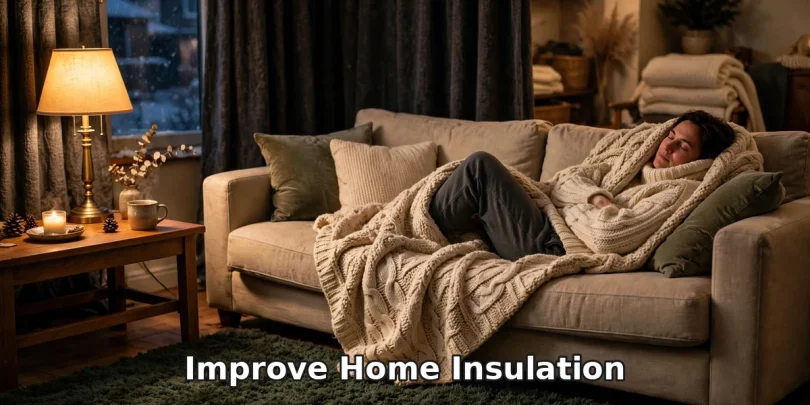
Not every gain needs a tool bag, and the soft layer of a home does real insulating work while making rooms feel like the warm places you pictured. Thick curtains, lined if you can manage it, hung close to the window and long enough to sit on the sill or the floor, trap a pocket of still air between glass and room, and closing them at dusk becomes a small daily ritual that keeps the day’s warmth in. A curtain across a draughty front door can change a cold hallway more than almost any other soft touch. This gentle end of how to improve home insulation suits renters and cautious beginners especially well, because nothing is drilled, filled or permanent, and everything can move house with you.
Rugs belong in the same kind paragraph, laid over the coldest stretches of floor, beside the bed where bare feet land, and under the desk where you sit still for hours. Choose the thickest you can clean easily, add underlay where the floor is hard and cold, and let throws and blankets work alongside them, so a person can feel warm at a slightly lower temperature. Then be kind to your radiators: fit reflector panels behind radiators on outside walls, shiny sheets that bounce heat back into the room instead of letting the wall drink it, keep furniture clear of them, and bleed them if the tops run cold. Soft layers and radiator care together show how to improve home insulation without a single building job, by helping the warmth you already make go further.
Habits That Keep the Warmth You Paid For
Insulation is the house doing its part, and habits are you doing yours, because the best materials cannot help a home whose heat is let out by routine. Close the curtains at dusk rather than at bedtime, shut the doors of rooms you are not heating so warmth stays where the people are, and keep the loft hatch shut through the evening. These sound almost too small to mention, yet they are how to improve home insulation in daily life, the difference between a well-insulated house and one that is actually run like one.
Heat the rooms you use, in the hours you use them, and let the rest sit cooler under closed doors rather than warming empty bedrooms to living-room level. A timer helps more than willpower, heat arriving just before you get up and easing off before you leave. When you feel a chill, reach first for a jumper, a throw and slippers before the thermostat climbs, because personal warmth is instant and room warmth is slow. Finally, wander with your warmth map twice a winter, checking that loft insulation has not been shoved aside by suitcases and that door seals still meet the frame. Habits are how to improve home insulation all winter long, the quiet housekeeping of a home that has learned to stay warm on purpose.
You may also like these
9 Modern Wall Decor Ideas for Living Room Spaces You Will Love
Small Living Room Decor Ideas That Make a Tiny Space Feel Bigger and Brighter
7 Proven Budget Friendly Bedroom Decor Ideas That Feel Instantly Cosy and Calm
9 Peaceful Minimalist Interior Design for Apartments Ideas That Breathe
9 Dreamy Best Colors for Small Bedrooms That Make Walls Melt Away
Conclusion
There is a deep satisfaction in a house that holds its warmth, in curtains drawn at dusk against a cold street, in floors that no longer bite bare feet, in a loft quietly wearing its thick hat above it all. None of it arrived by magic. It came from a mapped house, a sealed door, a covered ceiling and a few kind habits repeated until they felt like nothing at all, which is the real story of how to improve home insulation for most of us, not one expensive leap, but a row of sensible steps that add up to calm, sheltered evenings. Start with the loft and stop the draughts.
FAQs About How to Improve Home Insulation
Where should I start if my home feels cold everywhere?
Start above your head, with the loft, then seal the draughts around doors and windows, the two jobs that give the fastest warmth for the effort. An evening walk with your hand near frames and floors tells you your own order after that.
Can I insulate my home well if I rent it?
Yes, more than most renters expect, because the soft layer travels with you: thick curtains, rugs with underlay, draught strips and reflector panels behind radiators. For bigger work, talk to your landlord calmly, since a warmer home protects their building too.
Is it possible to seal a house too tightly?
It is, which is why draught-proofing travels with respect for ventilation: never block air bricks, wall vents or the air a boiler or fire needs. The aim is stopping cold air leaking in unwanted, not stopping fresh air altogether.
How do I know if my loft insulation needs replacing?
Lift the hatch on a bright day and look for thin, patchy or squashed material, gaps around the hatch and pipes, and stored boxes crushing areas flat. Topping it up evenly, with the eaves kept clear, is a calm weekend fix.
What is the cheapest change that actually feels warmer?
Sealing the gaps around your external doors, letterbox included, usually wins, because hallways set the tone for the whole house. A stopped draught is felt the same night, and curtains run it close as first steps in how to improve home insulation.